
Resources > Illinois Truck Toll Increase by 30% in 2027
Illinois Tollway’s $26.5B Plan Could Raise Truck Toll Costs by 30%: What Carriers Need to Know
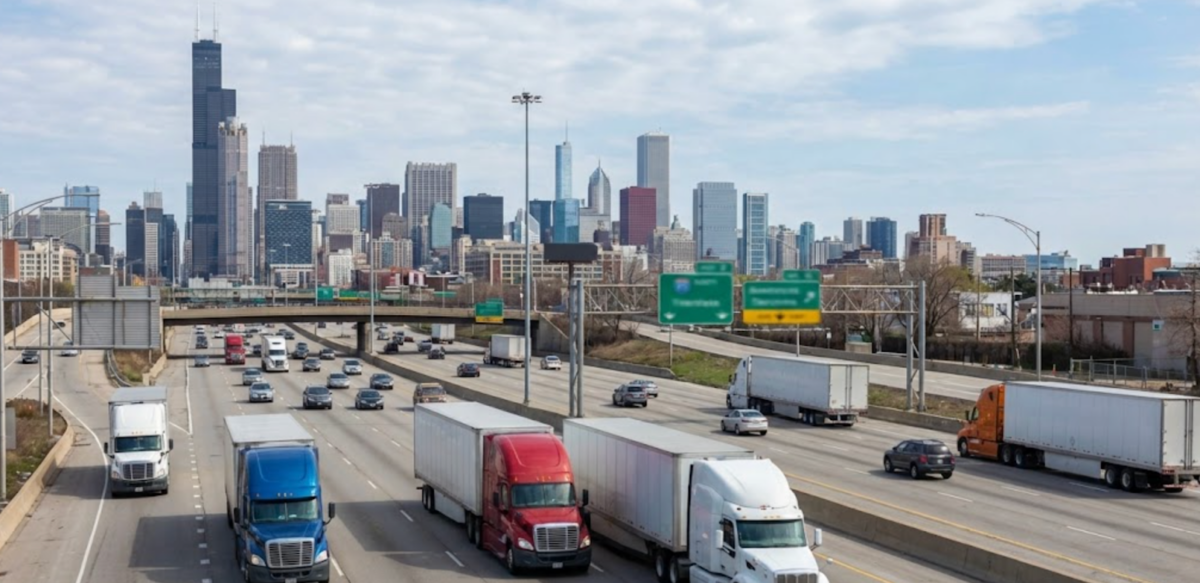
Commercial semi trucks on multi-lane highway in Chicago, Illinois
Table of Contents:
Takeaways
- The Illinois Tollway has unveiled a proposed 15-year, US$26.5-billion capital program called “Driving Connections,” covering 2027 through 2042.
- Commercial vehicles using I-PASS could see toll rates rise by roughly 30%, effective January 1, 2027, pushing average commercial rates to about 90 cents per mile.
- Starting in 2029, both commercial and passenger tolls would be reviewed every two years and adjusted based on the Consumer Price Index.
- The Tollway argues that congestion relief and reconstruction projects will offset higher costs through reduced travel times and improved reliability.
- Chicago is one of North America’s busiest freight corridors, so any toll change here has ripple effects across long-haul and regional trucking networks.
- The Illinois Tollway operates without state or federal tax dollars, funding itself entirely through tolls and revenue bonds.
Overview of Illinois Tollway’s Plan
The Illinois Tollway has introduced a sweeping new infrastructure proposal that could reshape the cost of moving freight through one of the busiest transportation corridors in North America. Known as “Driving Connections,” the plan is a 15-year capital program valued at roughly US$26.5 billion, running from 2027 through 2042. It’s designed to fund a broad slate of projects, including roadway expansions, congestion relief initiatives, system reconstruction, and ongoing maintenance across the tollway network.
To pay for all of this, the agency is proposing a toll increase that would take effect on January 1, 2027. For passenger vehicles, the increase would be notable, but for commercial trucking operations using the I-PASS electronic toll system, the change is especially significant: rates would climb by approximately 30%. Once implemented, average commercial toll rates would land around 90 cents per mile, a meaningful jump for fleets that regularly move through the Chicago region.
Illinois Tollway Executive Director Cassaundra Rouse framed the initiative around the Tollway’s broader role in the state’s economy, describing the network as a connector that links people to jobs, healthcare, housing, and other essential services people depend on, and positioning the new investment as central to that mission.
Why Trucking Companies Should Pay Attention
Chicago is the third most densely populated metropolitan area in the US, and widely regarded as one of the most important freight gateways on the continent. It sits at the intersection of major interstates and serves as a critical link between eastern and western freight lanes, as well as a hub for intermodal rail traffic. Because of this, any change to toll pricing in the region doesn’t just affect local drayage or regional carriers — it has the potential to influence freight costs across long-haul networks that pass through or around the city.
A 30% toll increase on commercial vehicles is not a trivial adjustment. For fleets running dozens or hundreds of trips through the corridor each month, even fractions of a cent per mile add up quickly across a large network. Carriers that rely heavily on the tollway system to avoid surface street congestion will need to factor this into their route planning, customer pricing, and overall cost-per-mile calculations well before the change takes effect in 2027.
Why This Could Reduce Traffic and Congestion
Tollway officials aren’t simply asking carriers and drivers to absorb higher costs without offering something in return. Their core argument is that the investment will pay for itself, at least partially, through improved traffic flow and reduced congestion — both of which carry real value for commercial fleets.
Chicago has long been recognized as one of the most congested freight markets in North America, with recurring bottlenecks that hurt truck productivity, inflate fuel costs, and make delivery windows harder to hit consistently. The Tollway points to past projects as evidence that infrastructure spending can meaningfully improve these conditions. For example, upgrades completed on the I-90 corridor in 2017 reportedly cut travel times by about 25 minutes, while work on the I-294/I-57 interchange shaved off as much as 13 minutes.
For a trucking company, time savings like these aren’t just a convenience — they translate directly into lower fuel consumption, less wear and tear on vehicles, better asset utilization, and more predictable delivery performance. The Tollway also notes that the average Chicago-area driver loses around 100 hours a year to traffic congestion, more than double the national average. While that figure is based on passenger vehicle data, the impact of congestion tends to be even more costly for commercial operations, where delays can cascade into missed appointments, driver hours-of-service complications, and reduced overall fleet productivity.
How the New Toll Structure Would Work
The January 2027 increase is only the starting point under this proposal. Beginning in 2029, the plan calls for both commercial and passenger toll rates to be reviewed and adjusted every two years, tied to changes in the Consumer Price Index. In other words, rather than large, infrequent hikes, the Tollway would move toward a more predictable, inflation-linked adjustment cycle.
For trucking companies, this shift matters for long-term planning. Instead of budgeting around occasional large toll jumps that can catch fleets off guard, carriers would instead be looking at smaller, more regular adjustments tied to broader economic conditions. This could make multi-year cost forecasting somewhat more manageable, even if the overall trajectory is still upward.
Putting the Toll Increase in Context
It’s worth noting how the proposed Illinois rates compare to toll pricing elsewhere on the continent. According to the Tollway, commercial toll rates across North American toll facilities currently range anywhere from 14 cents to $2.25 per mile. Under this framing, even with the proposed 30% increase pushing Illinois’s average commercial rate to about 90 cents per mile, the region would still fall within the broader range charged elsewhere.
That said, “within the range” doesn’t mean carriers won’t feel the impact. Companies that have built routing and pricing models around current Illinois rates will need to recalibrate, particularly those running high volumes of freight through the corridor on a regular basis.
How the Tollway Funds Itself
One important detail that sets the Illinois Tollway apart from many other highway agencies is its funding model. Unlike state departments of transportation that often rely on a mix of state and federal tax dollars, the Illinois Tollway receives no such tax funding. Instead, it operates entirely on toll revenue and revenue bonds to cover both day-to-day operations and long-term capital projects.
This structure helps explain why toll increases are central to funding a program of this scale. Without alternative funding streams like fuel tax allocations or general state appropriations, the agency’s ability to invest in reconstruction, expansion, and maintenance is directly tied to the rates it can charge users of the system — including the commercial trucking companies that rely on it daily.
What This Could Mean for Freight Costs Going Forward
For carriers operating in and around Chicago, the proposed changes carry both a cost and a potential benefit. On one hand, a 30% toll increase — with further inflation-linked adjustments every two years starting in 2029 — represents a real and ongoing rise in operating expenses for any fleet using the I-PASS system regularly. These costs will likely need to be factored into freight rates, contracts, and fuel surcharge structures over time.
On the other hand, if the promised congestion relief materializes as it has with past projects, carriers could see offsetting benefits in the form of faster transit times, more predictable schedules, and reduced fuel and maintenance costs from smoother traffic flow. Whether those benefits fully balance out the higher toll costs will likely vary by carrier, route, and how much of their operation depends on the tollway system versus surface streets.
Looking Ahead
The Illinois Tollway’s “Driving Connections” plan is a reminder that infrastructure investment and toll pricing are deeply intertwined, especially for an agency that operates without tax-based funding. For trucking companies moving freight through the Chicago region, the proposed 30% toll increase — set to take effect in 2027, with biennial CPI-based adjustments to follow — is a development worth keeping an eye on.
As the proposal moves forward, fleets that regularly use the tollway system would be wise to start modelling the cost impact now, while also weighing the potential long-term benefits of reduced congestion. Given Chicago’s role as a critical North American freight hub, decisions made here are likely to influence broader industry conversations about toll pricing, infrastructure funding, and the true cost of keeping freight moving efficiently.
Story originally from: TruckNews.com